
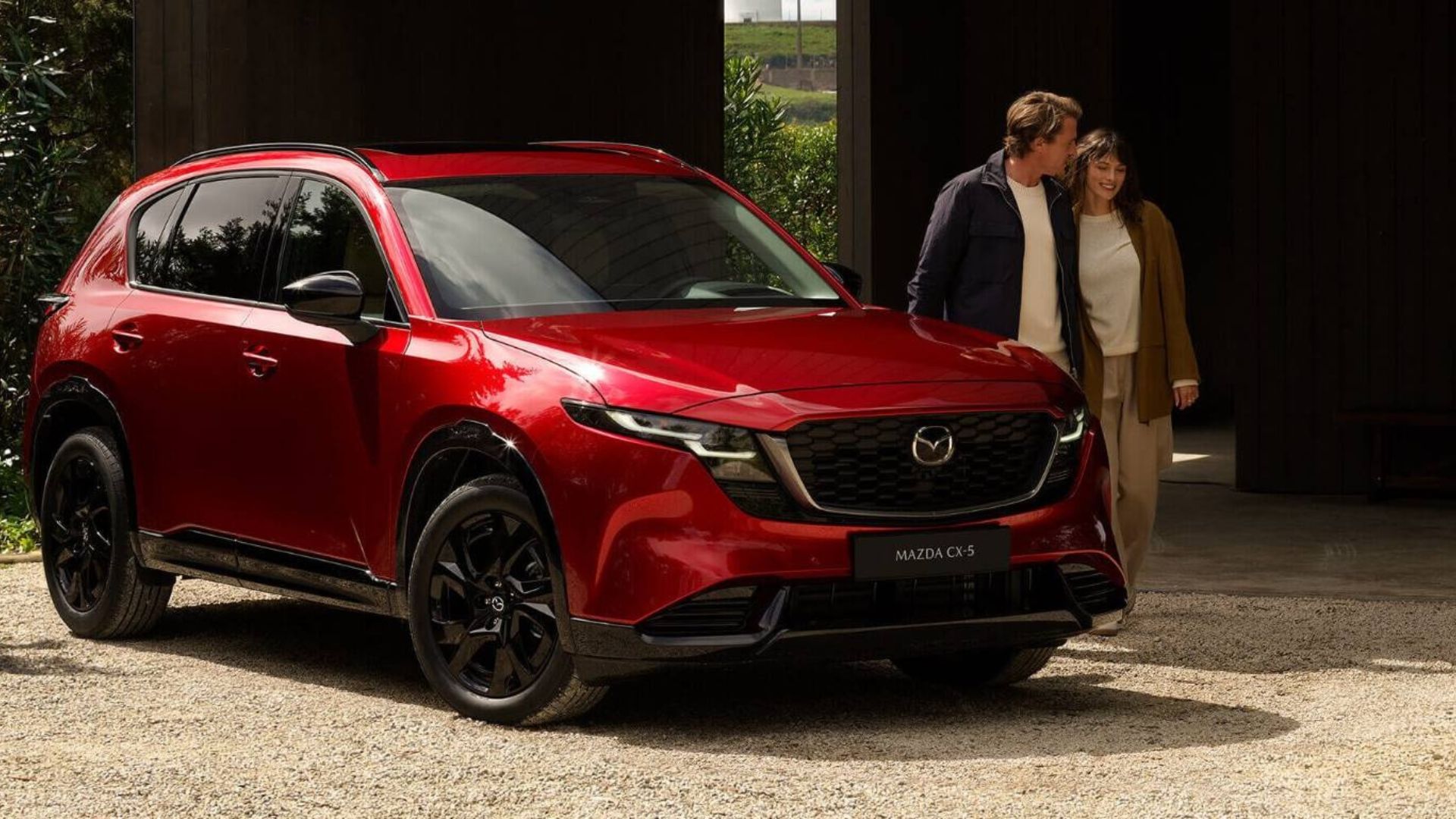
The Mazda CX-5 is our pick for Wellesley families who want a comfortable, well-equipped SUV that feels rewarding to drive, while the Honda CR-V offers more cargo room and stronger fuel economy. At Wellesley Mazda, part of parent dealer group Shaker Auto Group, we help shoppers compare Mazda vehicles around everyday needs, from rear-facing child seats to winter commuting. The CX-5’s 2026 redesign makes this comparison especially worthwhile, with more rear-seat space and a larger cargo area than its predecessor.
Key Takeaways
- The redesigned CX-5 offers 39.9 inches of rear legroom, close to the CR-V’s 41.0 inches.
- The gas-powered CR-V provides more cargo volume with the rear seats upright or folded.
- The CX-5 2.5 S Preferred includes heated front seats, a heated steering wheel, and a power liftgate.
- The 2026 CX-5 earned an IIHS Top Safety Pick+ award.
- The CR-V uses less fuel, particularly when equipped with its available hybrid powertrain.
Rear-Seat Space and Rear-Facing Child-Seat Fit
The CR-V has slightly more published rear legroom, but the redesigned CX-5 makes the difference much smaller than comparisons involving the previous Mazda generation suggest. For 2026, the CX-5 provides 39.9 inches of rear legroom against the CR-V’s 41.0 inches. Both seat five, with room for adults in the second row as well as children.
Mazda also enlarged the CX-5’s rear door openings, making it easier to reach into the back when buckling a child into a seat. That improvement matters during the repeated stops that come with school, daycare, and errands around Wellesley.
For a rear-facing child seat, the CR-V’s additional rear legroom gives it a useful starting advantage. However, neither rear-legroom measurement tells you exactly how far forward the front passenger must sit. The child seat’s approved recline angle, installation position, and shell shape affect that relationship. The CX-5 offers 41.7 inches of published front legroom, compared with 41.3 inches in the Honda, so it deserves a fresh look rather than assumptions based on the older model.
Which SUV Has More Room for a Stroller and Luggage?
The gas-powered CR-V gives you more space for a stroller and family luggage, with 39.3 cubic feet behind the rear seats compared with 33.7 cubic feet in the CX-5. Fold the rear seats, and those figures increase to 76.5 and 66.5 cubic feet, respectively. Most CR-V Hybrid trims provide 36.3 cubic feet behind the second row, so powertrain choice also affects the comparison.
Mazda’s advantage is its 40/20/40-split rear seatback, which lets you fold the narrow center section for a longer item while keeping both outboard seats upright. The CR-V uses a 60/40-split rear seatback.
For weekends beyond Needham or a longer family trip, the Honda wins on outright capacity. The Mazda offers a useful balance of expanded storage space and seating flexibility without moving into a larger SUV.
Safety Ratings and Standard Driver Assistance
The 2026 CX-5 has a meaningful safety advantage in the IIHS updated moderate-overlap front crash test, earning Good compared with the 2026 CR-V’s Poor rating. Both earned Good ratings in the small-overlap front and updated side tests, and the CX-5 earned the institute’s Top Safety Pick+ award. These results apply to the specified model years.
Smart Brake Support, Mazda’s system that can warn of certain potential collisions and apply the brakes, comes standard on the CX-5. Mazda Radar Cruise Control with Speed Limit Assist, which helps maintain a selected following distance and supports speed-limit adjustments, is also standard. Blind Spot Monitoring, which alerts you to detected vehicles alongside, adds another useful layer of assistance.
Honda Sensing, Honda’s standard suite of safety and driver-assistance technologies, includes Collision Mitigation Braking System, which can apply braking when a frontal collision appears likely. Adaptive Cruise Control with Low-Speed Follow, which helps maintain distance from traffic ahead, is also included. Both SUVs provide substantial everyday assistance, while Mazda pairs its standard equipment with particularly strong crash-test performance.
Family-Friendly Trims to Compare
The CX-5 2.5 S Preferred and CR-V EX-L are sensible starting points for families seeking heated front seats, driver-seat memory, and a power liftgate. They put useful daily conveniences ahead of choosing the highest trim simply to get comfortable seating and easier cargo access.
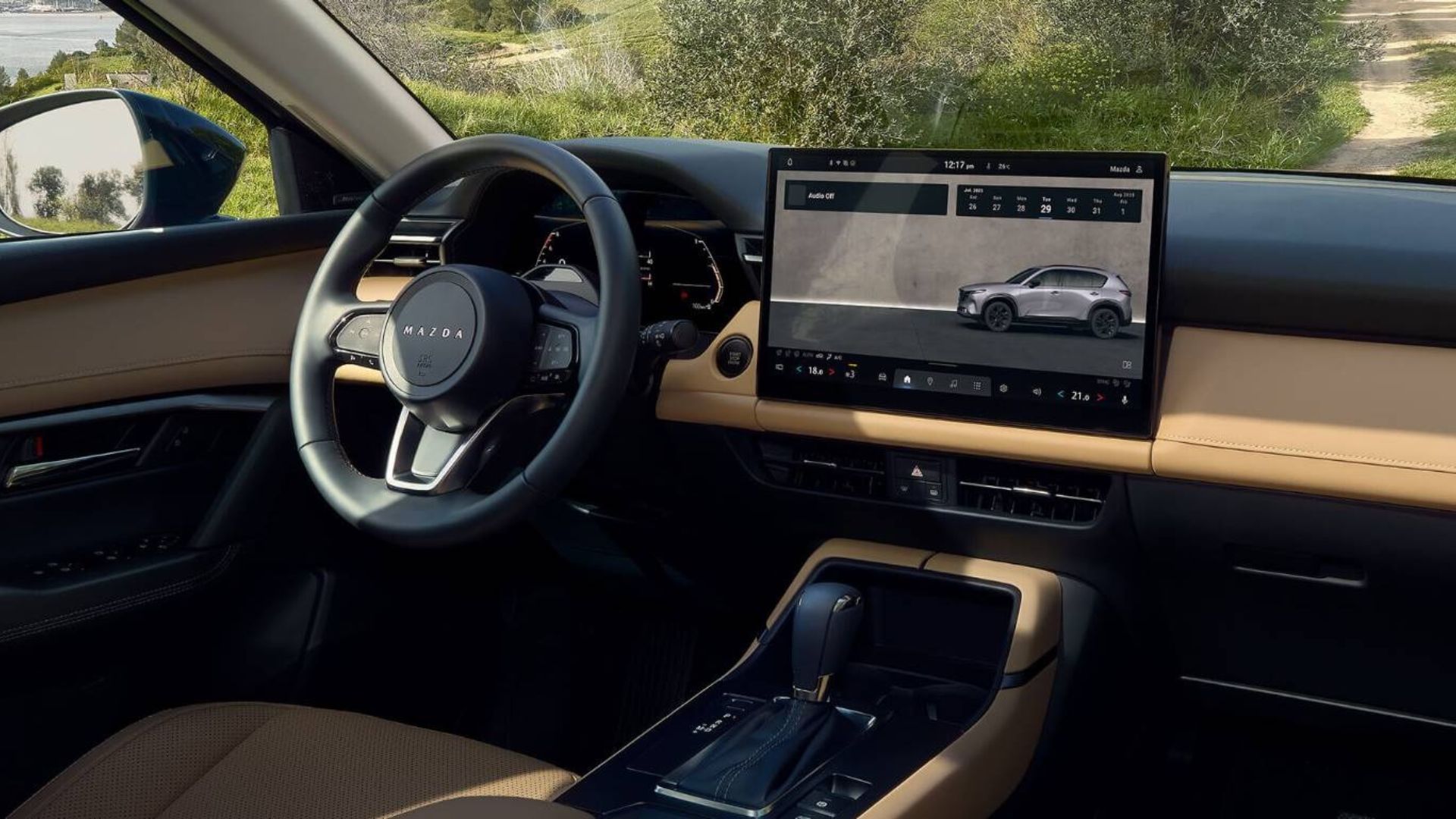
The Mazda adds a heated steering wheel and windshield wiper de-icer, welcome equipment during Massachusetts winters. Its Active Driving Display, a head-up display that projects driving information onto the windshield, also comes with the Preferred trim. The Honda EX-L counters with leather-trimmed seats, while the CX-5 2.5 S Premium adds leather seating and ventilated front seats.
We can help you browse our current CX-5 selection to compare Preferred and Premium models before deciding which equipment you want.
Ride Comfort and Everyday Driving Around Wellesley
The CX-5 suits drivers who prefer the familiar response of a conventional six-speed automatic, while the gas-powered CR-V uses a continuously variable transmission. That difference is noticeable when accelerating onto a highway or changing speed through suburban traffic. The Honda emphasizes smooth progress, while the Mazda offers distinct gear changes and a more traditional driving feel.
i-ACTIV AWD, Mazda’s all-wheel-drive system that distributes power between the front and rear wheels, is standard on the CX-5. Real Time AWD with Intelligent Control System, Honda’s system that sends power to the rear wheels when needed, is available or standard on the CR-V depending on trim.
For a commute toward Newton, both deserve attention for seat comfort and how they handle uneven pavement. We favor the Mazda for shoppers who want their family SUV to feel composed and engaging, not simply spacious.
Fuel Economy and Ownership Costs
The CR-V has the fuel-economy advantage, especially in hybrid form. For 2026, the CX-5 is EPA-rated at 26 mpg combined, compared with 29 mpg combined for the gas-powered CR-V with AWD. Most AWD CR-V Hybrid trims achieve 37 mpg combined, while the TrailSport Hybrid returns 35 mpg combined.
That difference matters most for families covering substantial annual mileage or spending plenty of time in traffic. Overall ownership costs also include insurance, maintenance, tires, financing, and depreciation, so fuel economy alone cannot establish which vehicle will cost your household less.
The Mazda’s standard i-ACTIV AWD and the Preferred trim’s winter-friendly equipment remain useful parts of its value. We can explain the maintenance schedule and equipped features on available vehicles so you can compare the actual SUVs you would choose.
Test Drive a CX-5 in Wellesley
Visit Wellesley Mazda in Wellesley, part of the Shaker Auto Group, to test drive an available CX-5. We’ll help you explore our current inventory and find the trim that fits your family’s daily routine.
*Penned by AI, polished by humans
